A Note, an Address, a Line to Houston
Letters from Liberation, Holocaust Museum Houston · 2026
It started with a folded piece of paper. The historian Dr Myfanwy Lloyd found it in the archive of Arthur Tyler, a soldier with the Oxfordshire Yeomanry who helped liberate Bergen-Belsen in April 1945. The scrap was covered in addresses: scribbled down by liberated prisoners hoping someone would write to their families for them. One belonged to a man in Houston: the uncle of Naomi Warren, a young Polish Jewish woman who had survived three concentration camps. Tyler kept his promise and wrote to him that she had survived.
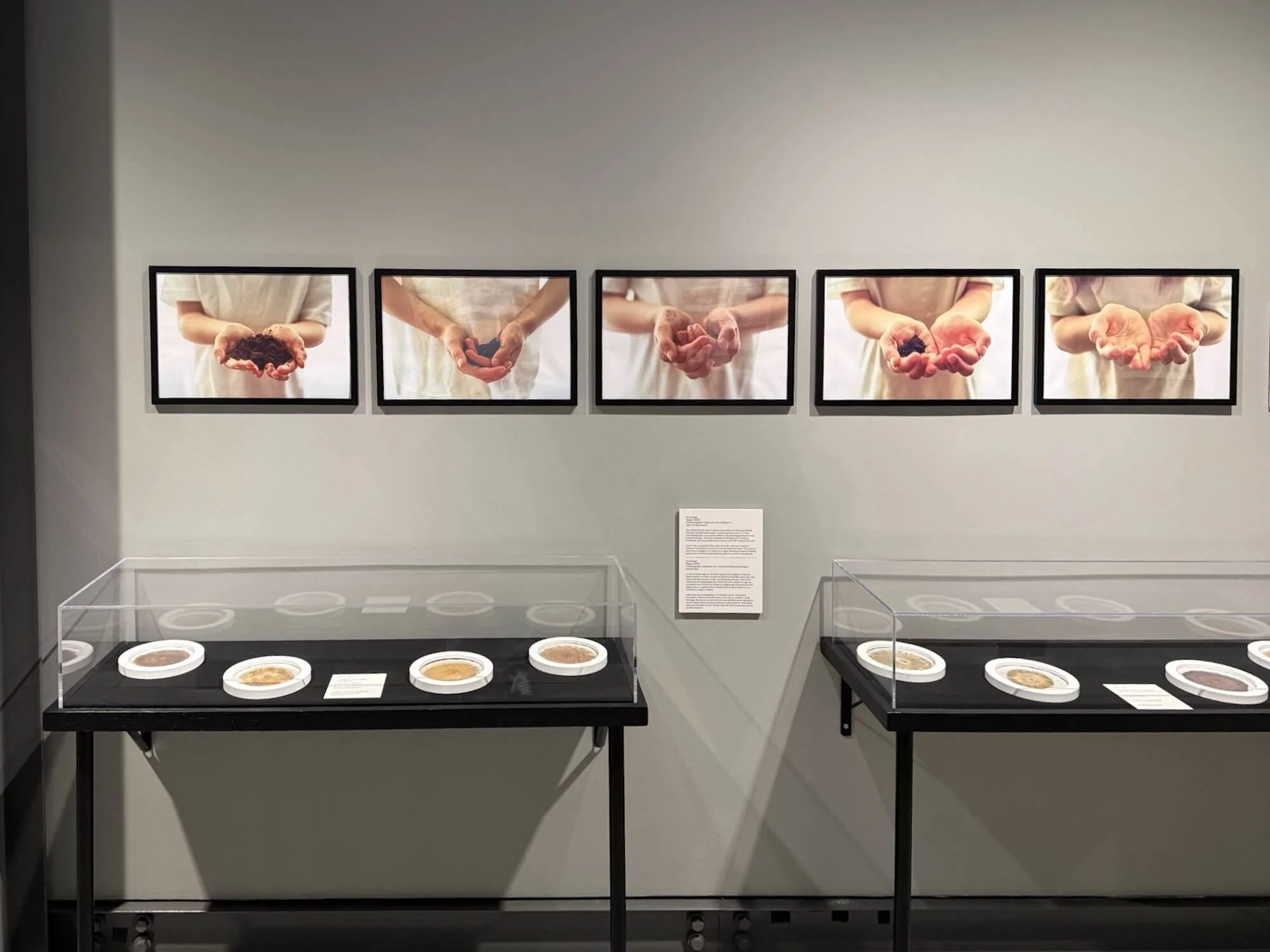
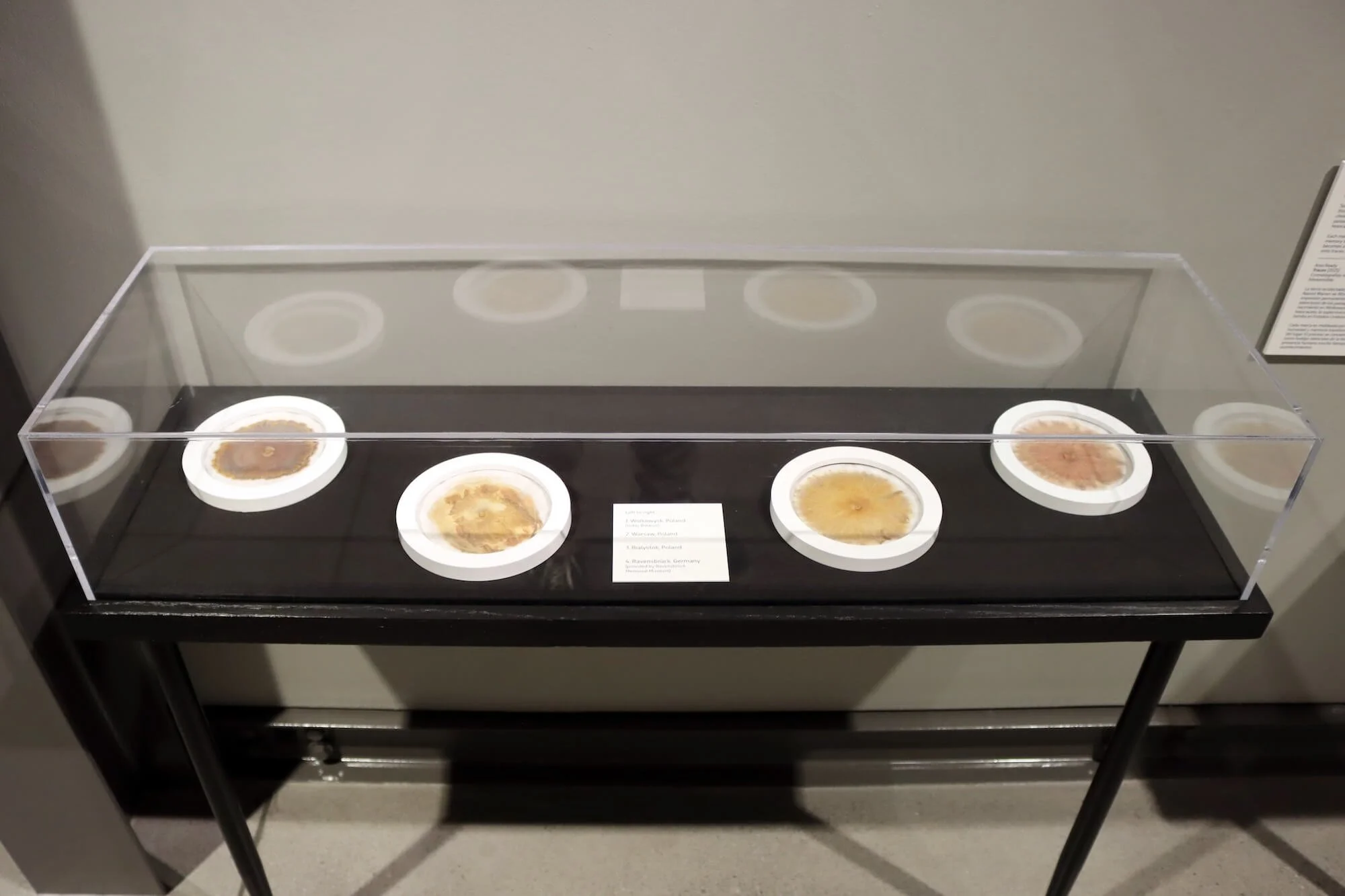
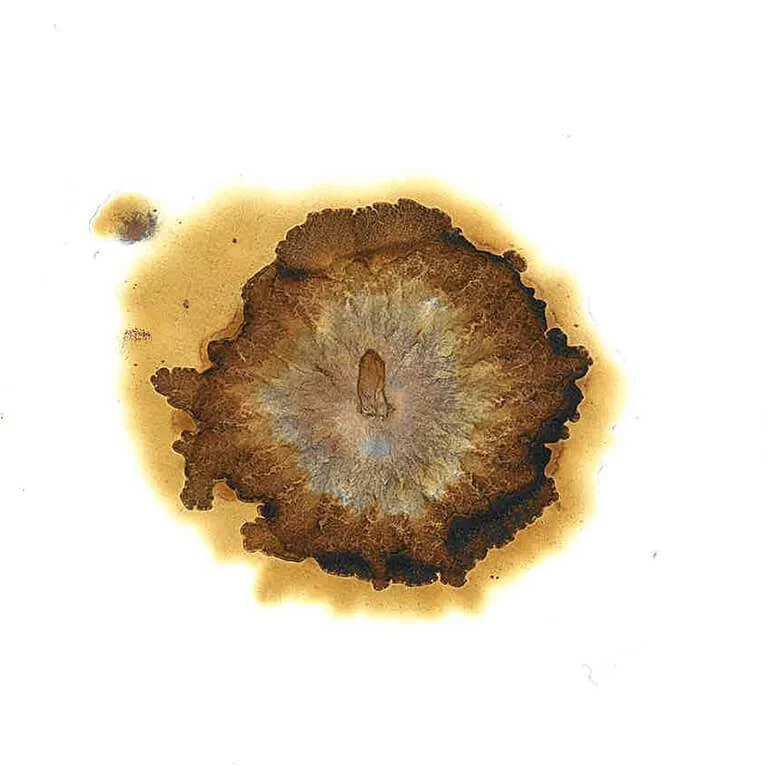
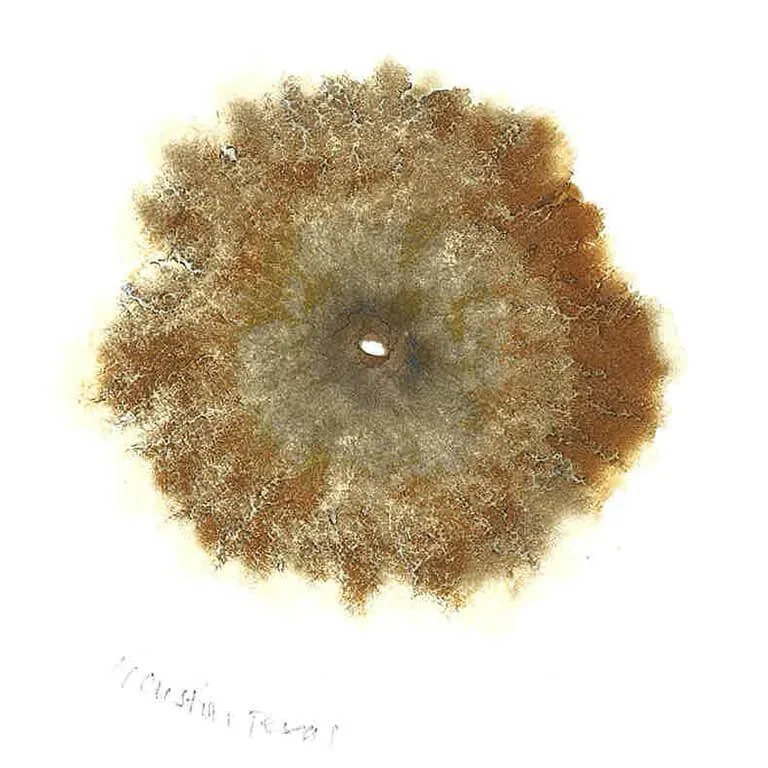
That single note, passed hand to hand, is what eventually sparked Life Lines, a multimedia project organised by Soldiers of Oxfordshire Museum in Woodstock. Soil became a large part of my contribution to it: a series of five photographs of my child holding a sample of soil, From Her Mother's Country, and a set of soil chromatographs, Traces. Seeing both included this year in Letters from Liberation at Holocaust Museum Houston felt genuinely moving.
I spent months researching Naomi's story, and one of the things that stayed with me most was her reflection on the idea of a network: the people who kept each other alive in the camps, the addresses passed along afterwards, and later, the soil samples I gathered from the places that shaped her life, sent to me by strangers, friends of friends, and family members. Traces grew out of that collaboration: chromatographs on light-sensitive paper, each one different, holding onto what the ground itself had witnessed.
From Her Mother's Country took the network somewhere closer to home. I photographed my youngest daughter holding a soil sample from Warsaw: a five-year-old cradling handfuls of earth from a place she has only a loose connection to, as the daughter of a migrant. The soil becomes a material proxy for home, memory, and belonging; placed in the hands of a child born across borders, it speaks to inherited history and the continuity between generations.
What makes this especially meaningful is that Houston is where Naomi eventually settled and built her life after everything she survived. One of the Traces chromatographs is made from soil collected outside her former house there, gathered by Dr Myfanwy Lloyd herself. Showing the work there felt like a kind of homecoming, an image of that soil finding its way back to the place it came from.
And there's something I keep sitting with: alongside this archival, experimental work, it's From Her Mother's Country, the most personal piece, made with my own daughter, that gets to live in the same room as Naomi's story. It's a strange, quiet privilege, seeing her small hands become part of something so much larger than two of us.
Exhibition
Letters from Liberation
Holocaust Museum Houston
Houston, USA
12 March – 16 October 2026
Related Work
Photography Credits
Installation Images: Courtesy of United States Holocaust Memorial Museum, Houston
