On Soil, Water and Chemistry as Language
Material experiments with soil chromatography, memory and place
There is a moment when a material stops being just a material and starts becoming a language.
That is what happened when soil entered my practice.
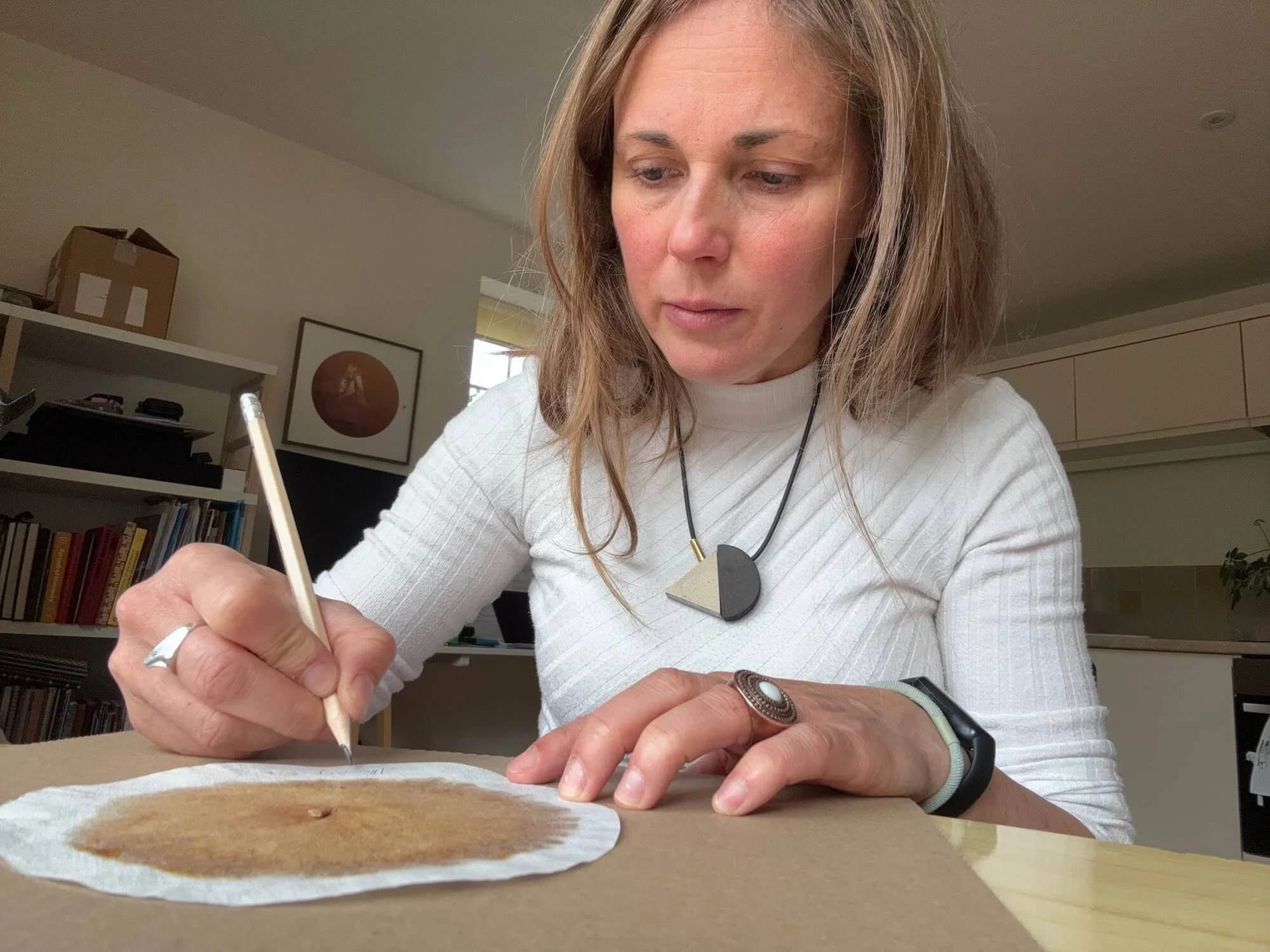
My work usually begins with images that are staged, performed, observed or recorded, often in conversation with archives and text. During my Arts Council England Developing Your Creative Practice grant in 2025, I had the time and space to experiment more freely with material, and to ask what might happen if the image itself was made differently.
As I moved further into stories shaped by loss, displacement and memory while working with Soldiers of Oxfordshire Museum in Woodstock, I began to want something more physical, something that could carry a trace of place rather than simply represent it.
Soil offered that immediately.
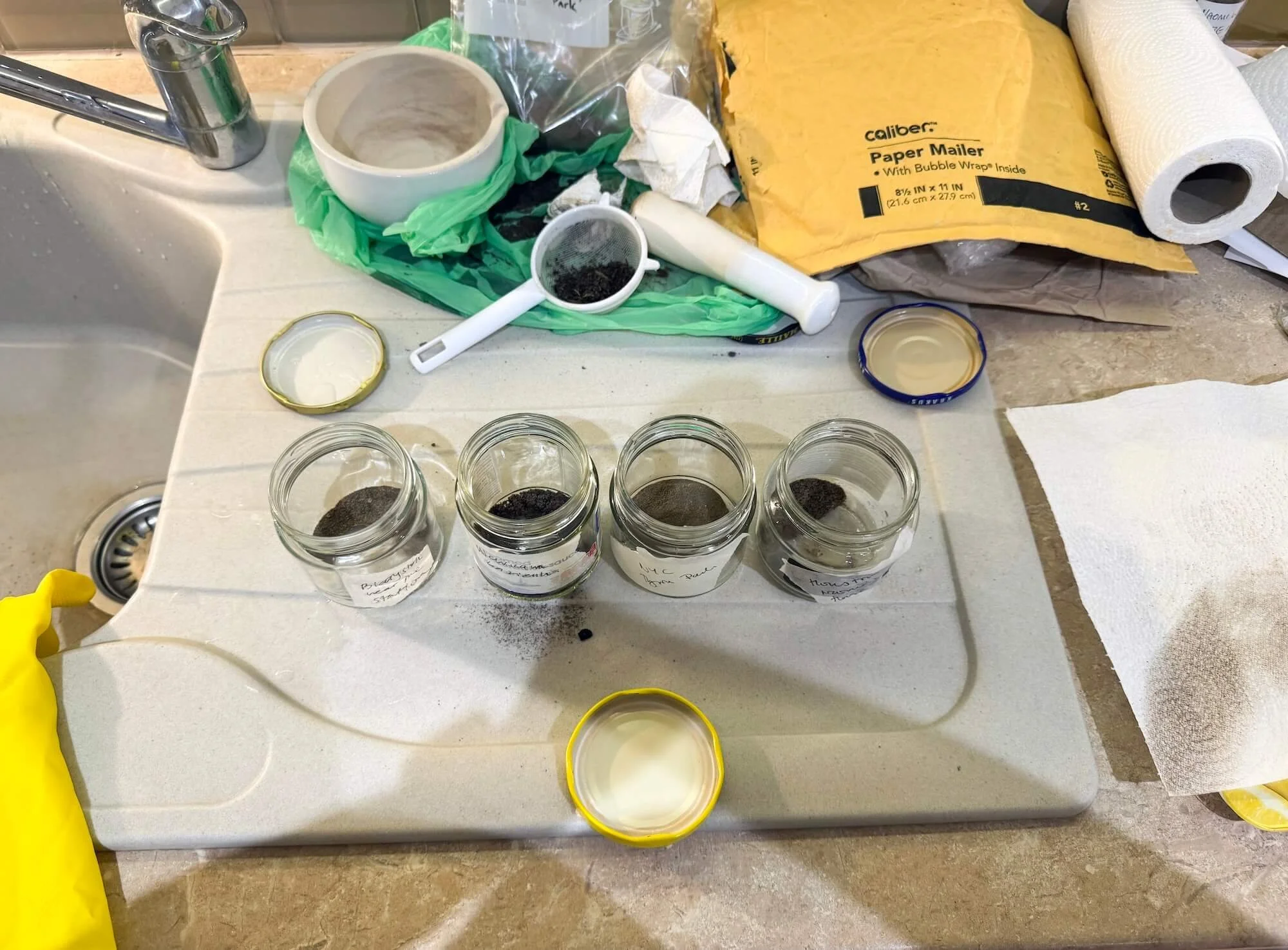
In Life Lines, where I was tracing the journey of Naomi Kaplan Warren from pre-war Poland through Auschwitz, Ravensbrück and Bergen-Belsen, and later to the United States, I began collecting soil from places connected to her life. Some samples were gathered for me by friends, family and collaborators, so the work itself became dependent on small acts of trust and generosity.
I used the soil to make chromatographs through a camera-less process based on circular chromatography. I first learned the method from an online tutorial and then experimented in the studio. For anyone interested in the technical process, I’ve linked the chromatography method I used here.
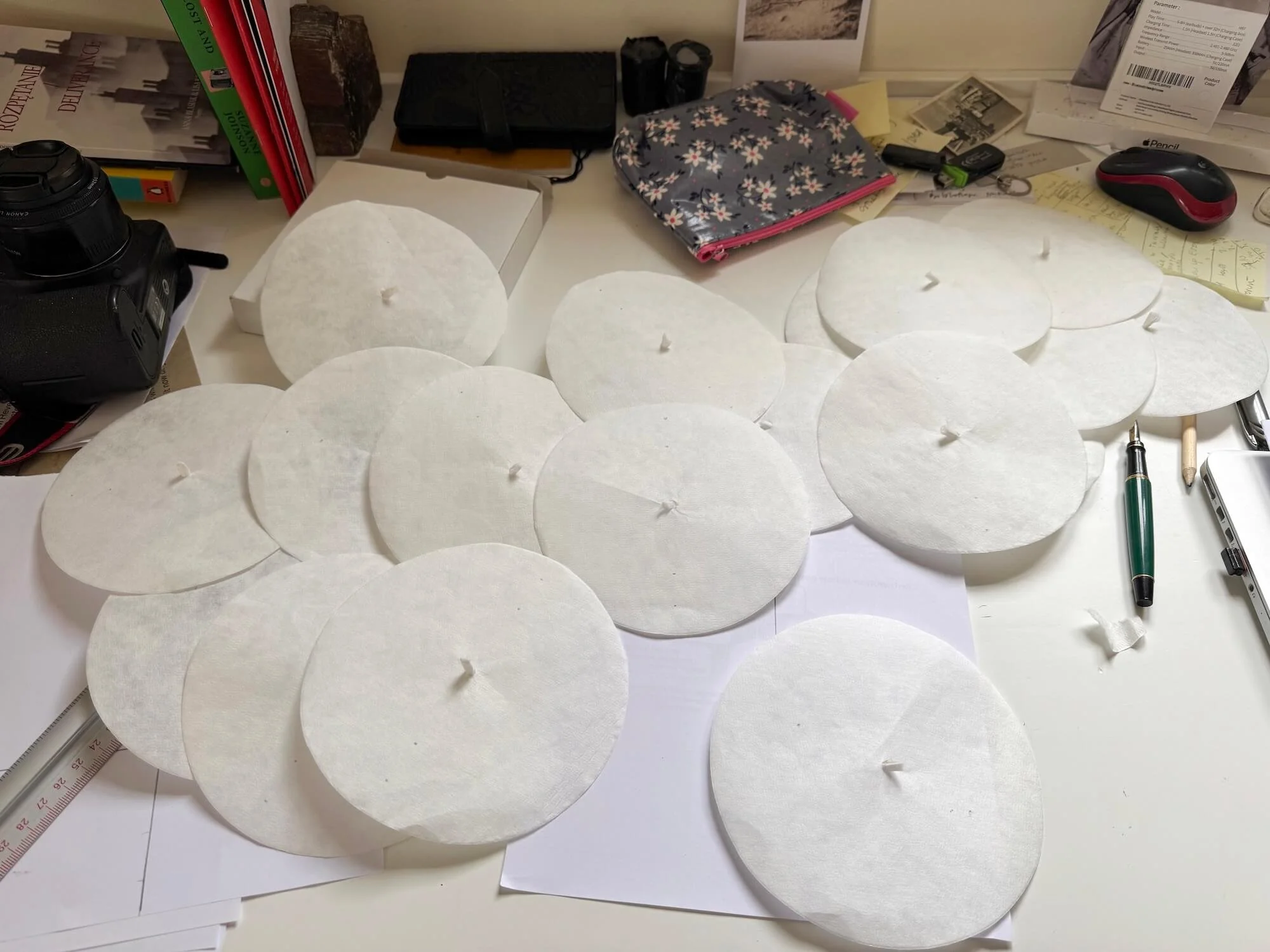
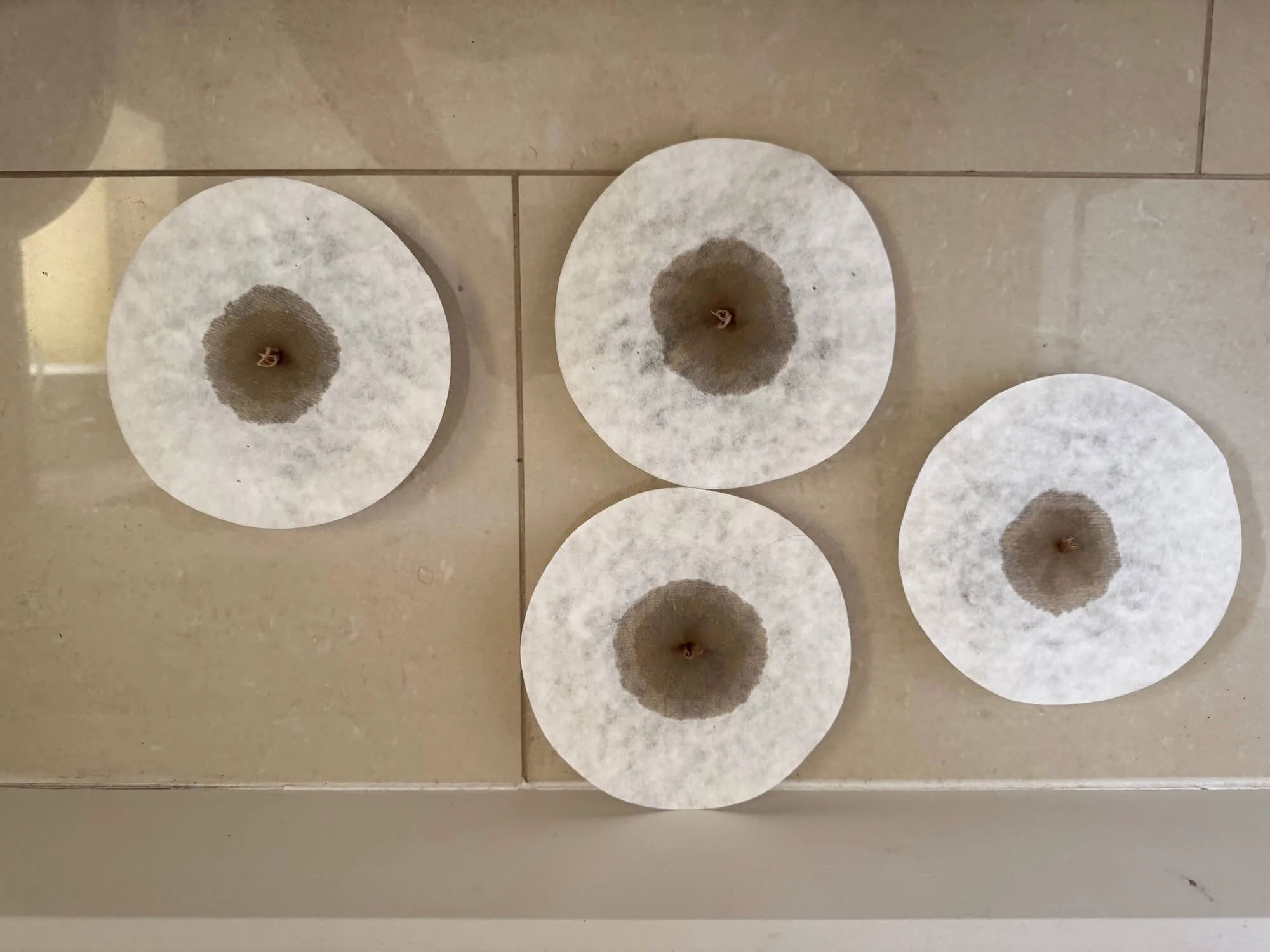
The soil was dried and sieved, then mixed with a prepared solution. Filter paper was sensitised separately, and the soil extract was allowed to travel slowly through it by capillary action.
The next part I loved most. Once the process had begun, I had to give up control.
The liquid moved outward through the paper, producing rings, stains, gradients and faint traces. Each soil behaved differently. Some results were vivid, others almost ghostly. None could be exactly repeated.
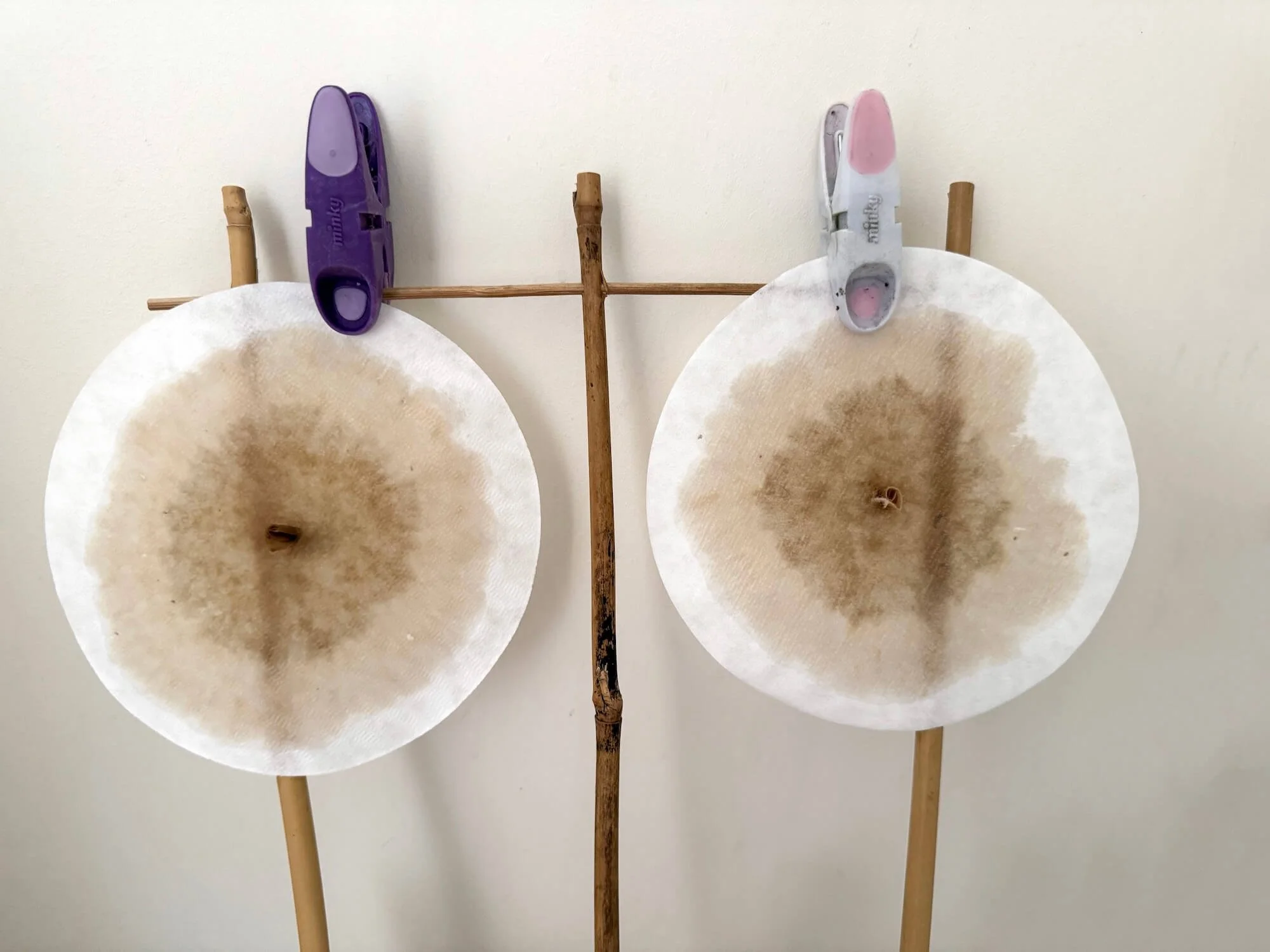
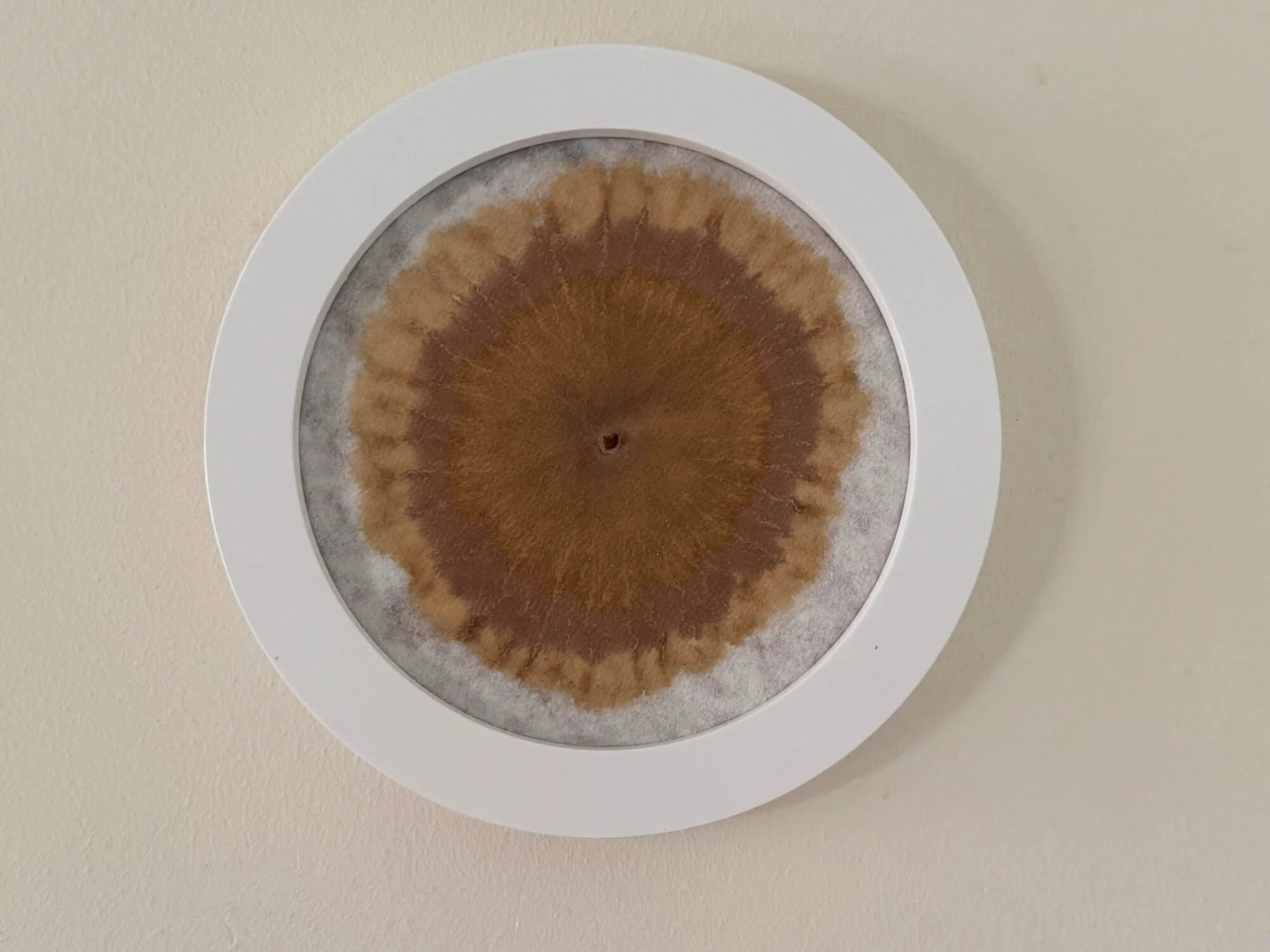
That unpredictability felt important. Memory does not behave neatly either. It is layered, incomplete and sometimes resistant to being fully recovered.
A conventional image can describe that condition. A chromatograph can enact it.
The soil eventually became part of a wider installation, placed alongside archival images and fragments of Naomi’s story. I wanted history to be encountered not only through looking, but through matter, texture and touch.
Sometimes the smallest material can carry the greatest distance.
