Stories Behind the Images: Leading Tours of Lee Miller: A Woman at War
Soldiers of Oxfordshire Museum, Woodstock · 2026
My connection with Lee Miller began long before I started work on Lee Miller: A Woman at War at Soldiers of Oxfordshire Museum in Woodstock, where I helped select the images, shaped the curatorial narrative, and developed the public programme around the show.
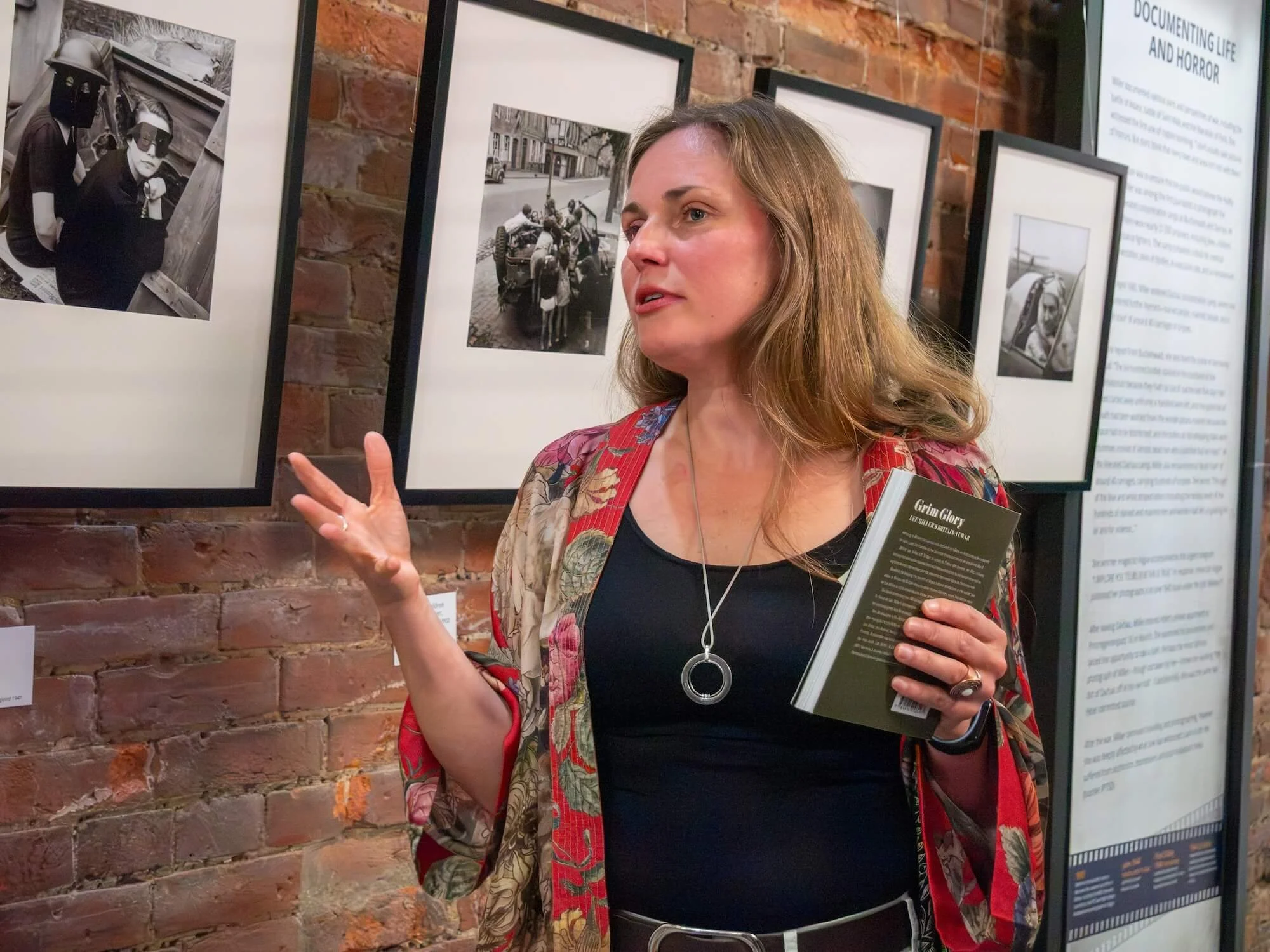
In 2023, my solo exhibition at ronapainting gallery in Oxford was the next photography show after the Lee Miller exhibition in the same space (so I had big shoes to fill!). It was there that I first encountered her Egyptian photographs, including one of my favourite images, Portrait of Space. I also met Ami Bouhassane, Lee's granddaughter and Director of the Lee Miller Archives, whose knowledge and generosity brought Lee's story vividly to life.
Three years later, I found myself leading two public tours of Lee Miller: A Woman at War, sharing some of the stories that have made her one of the artists I can't stop thinking about.
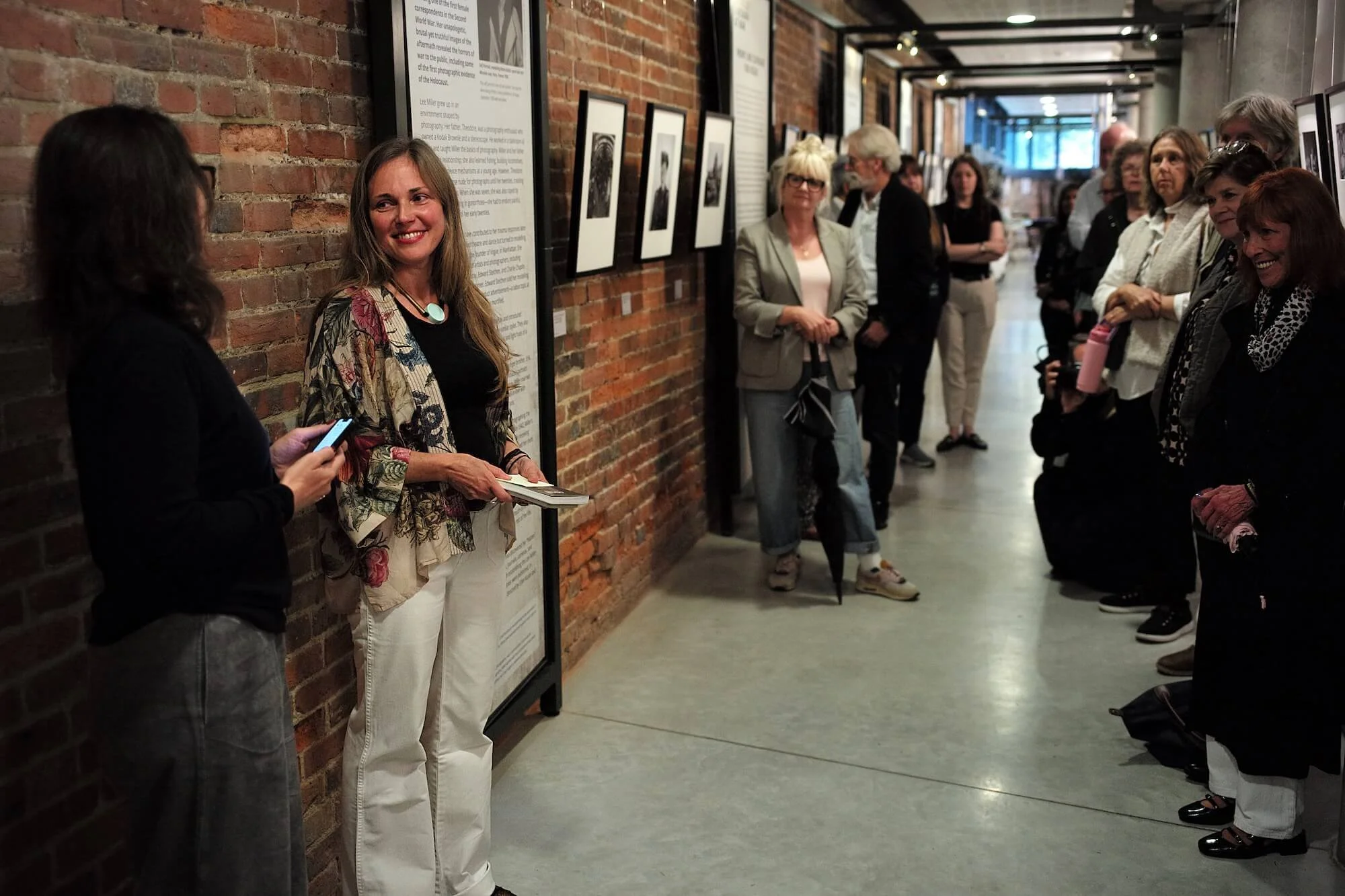
Although Miller is widely known as a war correspondent, it was her Surrealist work that first captured my imagination. I am drawn to her ability to find the extraordinary within the ordinary, revealing moments of strangeness and wonder in everyday life.
What I find deeply frustrating is how often Miller's contribution has been diminished. For decades she was described as a "Surrealist muse", a label that obscures her role as an artist and innovator in her own right. Miller was not simply present within the movement; she helped shape it. During the tours, I particularly enjoyed telling the story of solarisation, a technique she discovered, or rediscovered, by accident when a mouse ran through her darkroom. Startled, she switched on the light. The sudden arrival of light created a halo effect in the images. She embraced the unexpected and went on to experiment with it deliberately. Yet the technique is still frequently attributed to Man Ray rather than Miller herself.
Much of my own work focuses on bringing women's histories back to light, so it felt important to include the photograph Lee took of Anna Leska, a Polish pilot with the Air Transport Auxiliary, who escaped Warsaw when it was bombed in 1939 and went on to ferry a huge number of aircraft in the UK, clocking over 1,200 flying miles.
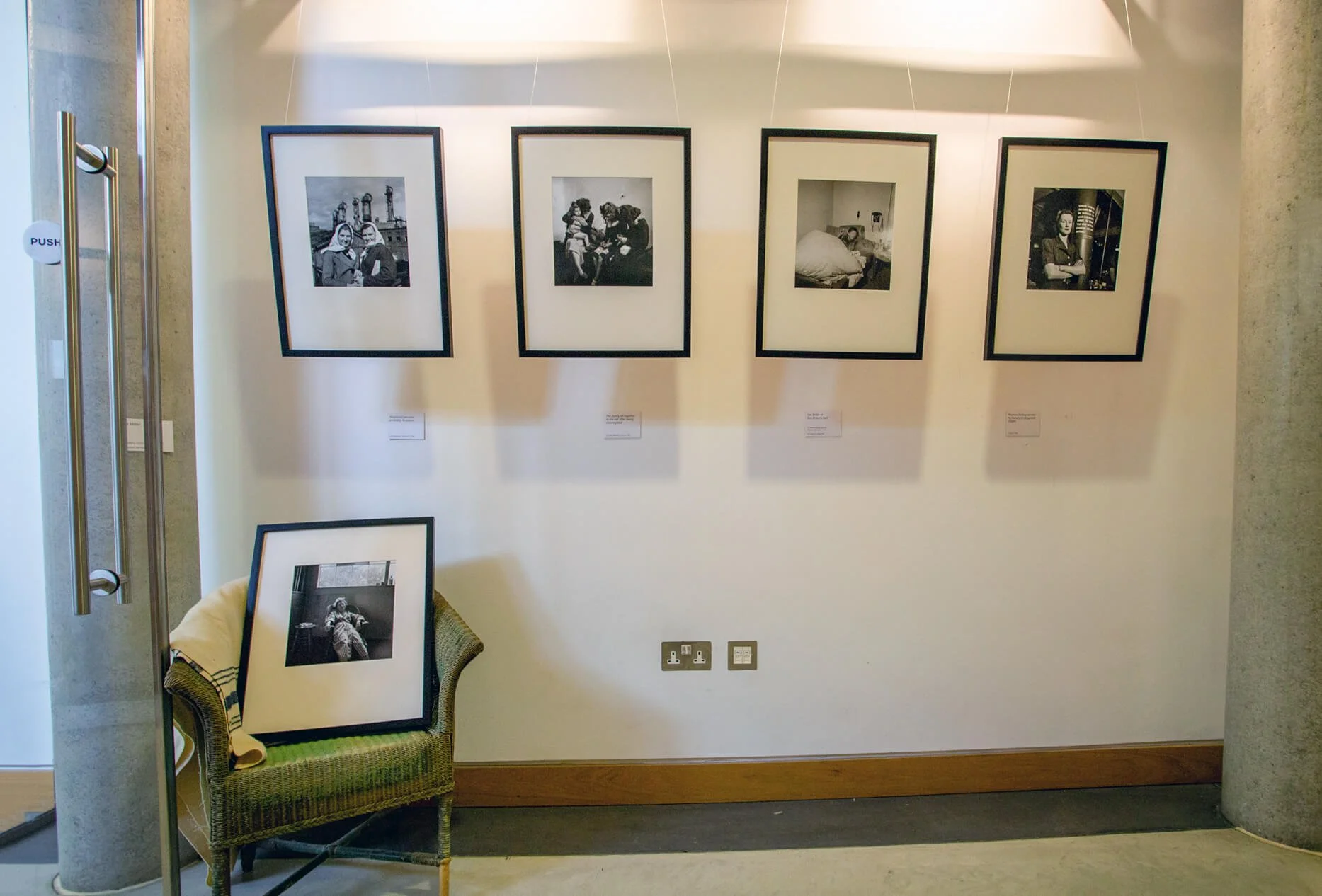
The exhibition ended with a portrait taken by Roland Penrose in 1946: Lee slumped in a chair, visibly exhausted. I used this image as a metaphor for the personal cost of bearing witness. Lee, embedded with American troops, had recorded the liberation of Buchenwald and Dachau, dying children in a Viennese hospital, and women publicly shamed and abused for consorting with Germans in France.
She saw and experienced so much that life after the war became difficult. Photography and writing became increasingly painful for her, and cooking became another form of creative expression. Ami Bouhassane would later publish the cookbook Miller never had the chance to complete herself. It felt like a fitting way to end the tours with slices of Lee Miller's cake, baked from a recipe she developed later in life: celebrating not only a pioneering photographer and war correspondent, but a woman who never stopped creating.
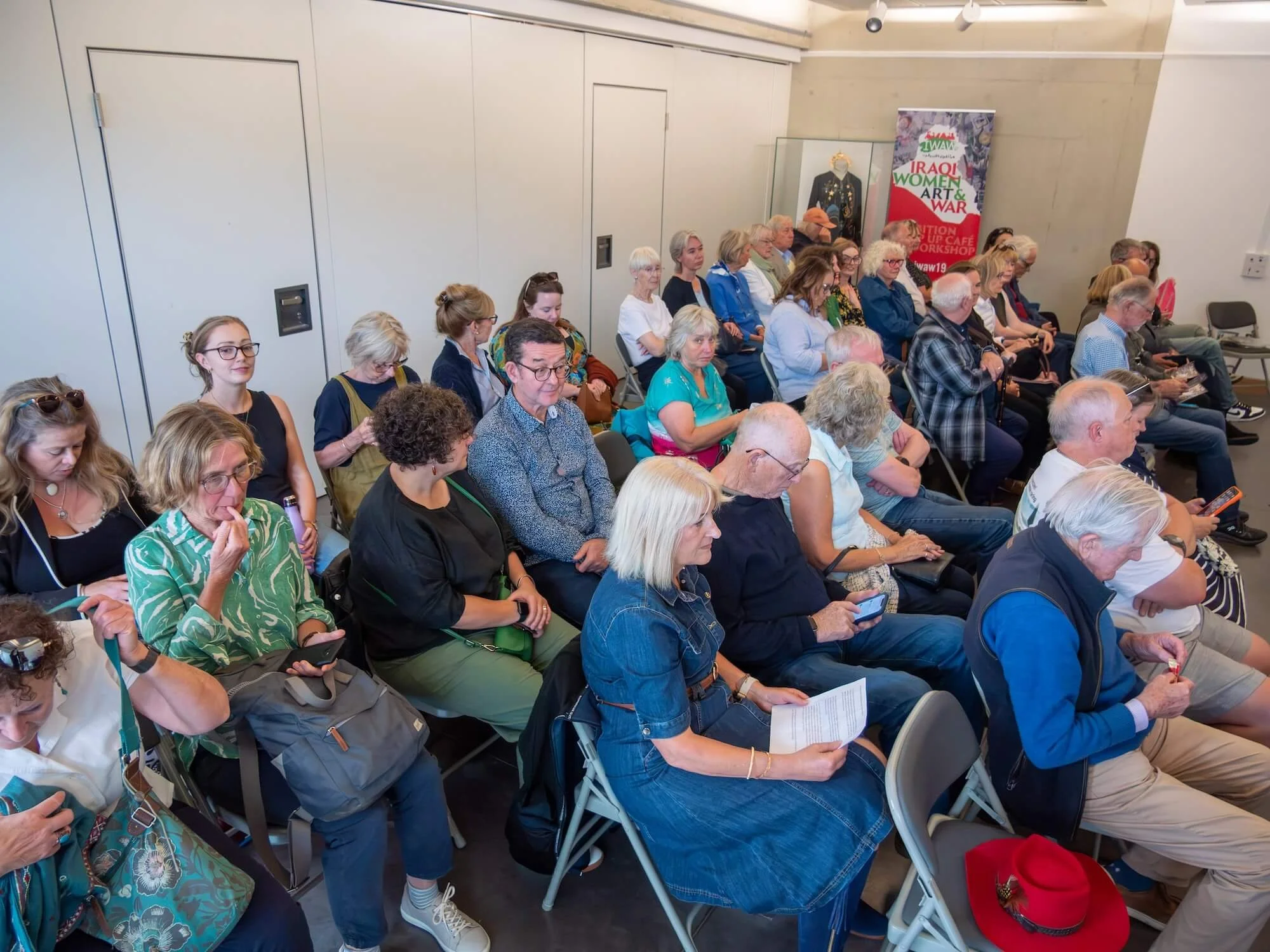
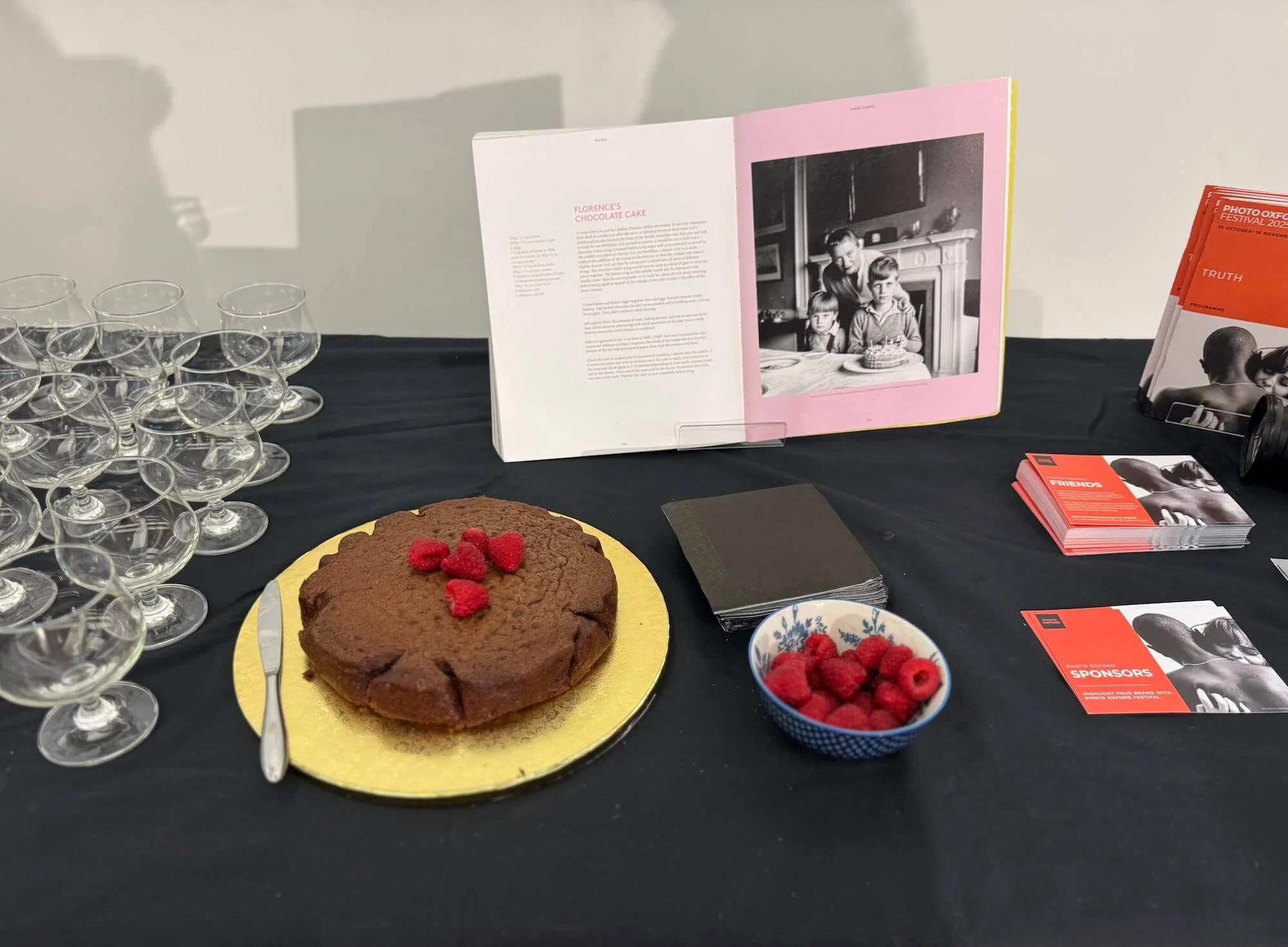
“ Ania’s afternoon looking at the life and work of Lee Miller was superb. Ania had thoroughly researched Miller and delivered a fascinating insight to a dramatic and adventurous life. Ania’s discussion of the prints on display added so much to their impact and revealed some little-known facts about the circumstances. It was a great afternoon and topped off with a home-made chocolate cake from Miller’s recipe book!”
Phil Joyce, Photography tutor and Fellow of the Royal Photographic Society
Related Project
Lee Miller: A Woman at War (Research & Collaboration)
Photography Credits
Portrait of Ania Ready: David Stumpp
Participants on the tour: Philip Joyce.
Lee Miller photographs © courtesy of Lee Miller Archives
Additional installation photography: Ania Ready
